
Sharks are some of the most fascinating creatures and scientists believe they have been around for over 400 million years – making them older then the dinosaurs. They are the ocean’s top predators, but there’s so much more to know about these sharks than just their prowess at hunting.
With that in mind, here’s everything you should know about sharks, including some species you might never have heard of.
What is a shark?
Sharks are a type of fish, characterised by their skeleton that’s made from cartilage and not bone. Contrary to some belief, sharks are not mammals. They have gills in order to breathe and are generally cold-blooded, which differs to the typical physiology of mammals.
Sharks belong to the class Chondrichthyes and the subclass Elasmobranchii, which also includes rays and skates. From here, there are 8 main orders or families of sharks, each with their own uniquely identifying characteristics. For example, whale sharks and nurse sharks belong to the family Orectolobiformes while bullhead sharks belong to the order Heterodontiformes.
Top facts about sharks
So, what other facts should you know about these incredible creatures?
There are over 500 shark species known in the world
So far we know there’s over 500 different species of shark, ranging from small species like the pygmy lantern shark which measures around 20cm, up to the whale shark which can reach up to 12 metres.
Carcharhiniformes is the largest group of sharks, which includes the tiger shark and hammerhead shark.
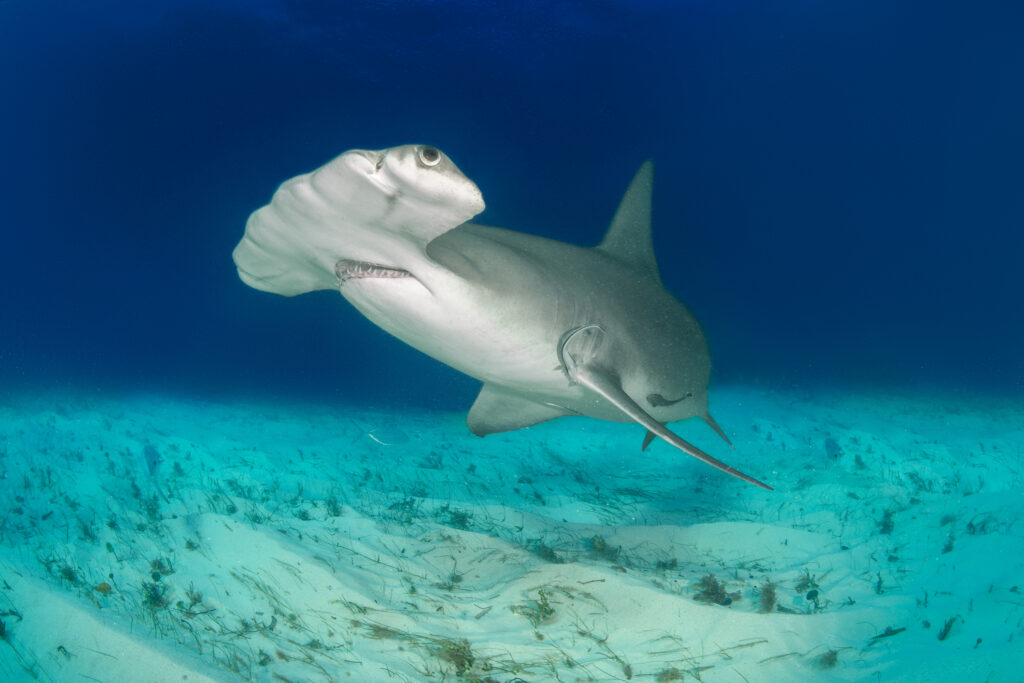
Sharks come in all shapes and sizes
The appearance of sharks are incredibly diverse. They all have multiple rows of teeth and their bodies are covered in scales called dermal denticles, but they can be found with differing head shapes and body patterns.
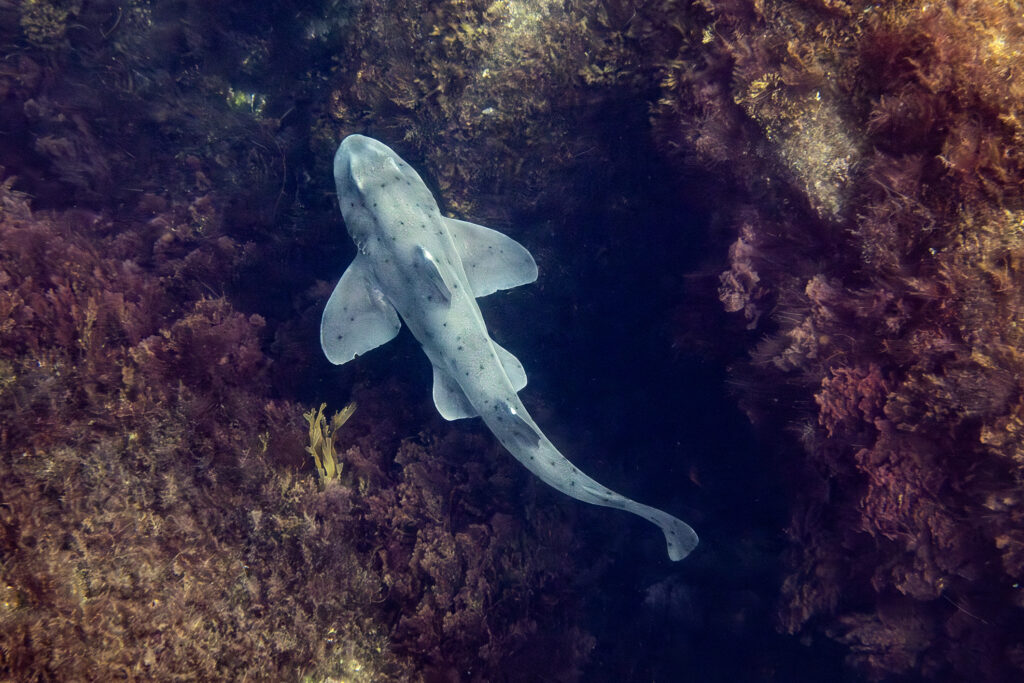
For example, the brown banded bamboo shark (Chiloscyllium punctatum) has distinctive brown brands that run along its body, while the California horn shark (Heterodontus franciscii) has prominent ridges above their eyes.
They have very varied diets
Most shark species are carnivores, typically feeding on other fish, marine mammals, crustaceans and more. Species like the whale shark and basking shark will filter feed on plankton, but most other sharks will hunt using their senses to ambush and pursuit their prey.
They are known as apex predators, which means they have no predators themselves and therefore no competition for food.
Sharks can live for a really long time
We already know that sharks are ancient species, and have been around for longer than some trees! While their lifespan depends on the species, sharks can live for decades with some species being some of the longest living animals in the world.
Some sharks have a slow metabolism to help reduce cellular damage, while others have the ability to repair genetic damage. Sharks can also replace their teeth when lost or damaged.
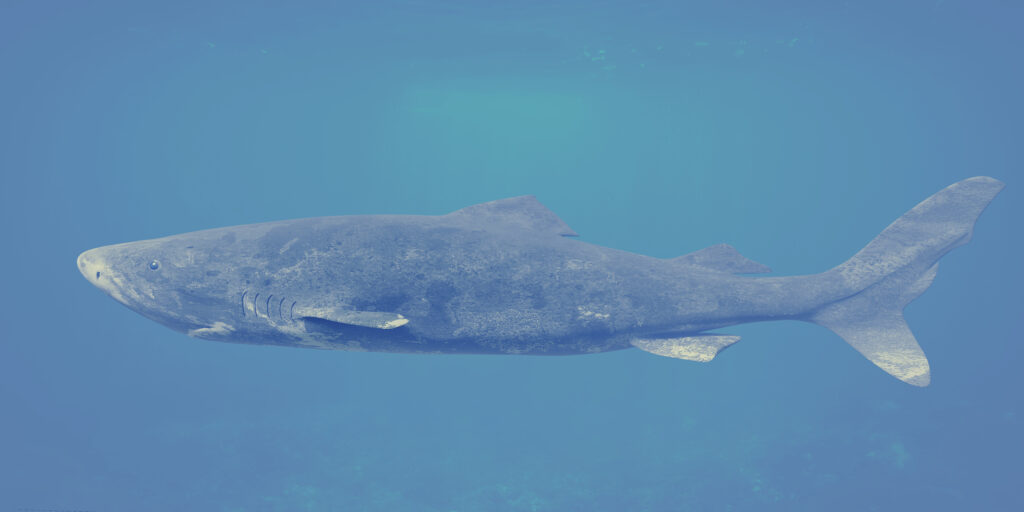
The Greenland shark is the longest-living vertebrate, with an estimate lifespan of over 200 years.
Sharks use highly developed senses to survive
Sharks have evolved with incredible senses in order to thrive in their habitats. They can detect electrical signals in the water, thanks to the ampullae of Lorenzini which is a special sensory organ. They also use electroreception to locate their prey.
Sharks also have excellent vision and can see in low-light conditions, with eyes perfectly adapted for hunting thanks to a reflective layer that improves night vision and detecting movement.
Their nostrils are used purely for detecting smell, not breathing. The water passes through their nostrils, allowing the sharks to pick up chemical signals even from long distances. This helps them to find prey, mates or even avoid danger.
Some sharks can glow in the dark
Scientists found that some species of shark can glow in the dark, known as bioluminescence. This includes the kitefin shark, swell shark and chain catshark. They do this through specialised light-producing cells like photophores, emitting a blue-green light.
Some sharks will also achieve biofluorescence, which is where the shark will absorb high-energy light and re-emit it. This differs to bioluminescence, which produces light through chemicals, and instead needs an external light source.
Are sharks dangerous to humans?
Sharks are not as dangerous as they are usually perceived to be, with a lot of films and television making them out to be more vicious. In fact, unprovoked attacks from sharks are very rare, with around 70 occurrences per year.
In the US alone, the odds of being attacked by a shark are 1 in 11 million. In 2024, it was reported that the number of shark attacks had fallen to a 28-year low.
Unusual sharks you’ve probably never heard of
With so many different species of shark, it’s highly likely there’s a few out there that you’re unfamiliar with. Here are just a few interesting species that you should know!
Frilled shark
The frilled shark (Chlamydoselachus anguineus) is a primitive and mysterious creature, living in the deep waters of the Atlantic and Pacific oceans. They have an eel-like body and snake-like head, with incredibly sharp teeth. It has been known to swallow smaller prey whole.
Goblin shark
Goblin sharks (Mitsukurina owstoni) usually live at the bottom of the ocean and have a very distinct appearance, with a long, prominent snout and protruding jaw. It is the only living species in the family Mitsukurinidae, which is around 125 million years old.
Bonnethead shark
The bonnethead shark (Sphyrna tiburo) is related to the hammerhead shark, recognised for their shovel-shaped head. In a fascinating turn, the female bonnethead shark can reproduce by themselves, something that scientists found in 2007. They are found in shallower waters, typically across the Atlantic and Pacific oceans.
Megamouth shark
Rarely seen by humans, the megamouth shark (Megachasma pelagios) is a filter feeder and was only discovered in the 1970s. They are the third largest shark, and there’s still a lot we don’t know about this species. It’s usually found off the coast of Australia, Vietnam and Sri Lanka, but it’s only been observed or sighted a handful of times!
Why sharks are important to the ocean ecosystem
As apex predators, shark play an important role in their marine ecosystems. Firstly, they help to balance their ecosystems due to their prey, keeping other populations in check and allowing others to flourish.
Secondly, when sharks prey on plant-eating fish, they have a positive impact on the carbon cycle, limiting the consumption of ocean vegetation like seagrass meadows and kelp forests, which are really important for absorbing carbon.
Thirdly, as some sharks migrate, they inadvertently redistribute nutrients through the ocean. This helps to mix nutrient and oxygen-rich water with areas that may be nutrient-poor.
Why are sharks endangered, and how can we protect them?
The main threats to sharks include overfishing and bycatch, as well as habitat loss. However, there is still some fishing practice around the world known as shark finning, whereby the fin is removed while still alive. This puts the sharks at huge risk.
More than a third of all shark and ray species are threatened with extinction, such as the bull shark and blacktip shark which are classified as vulnerable, and the sand tiger shark that is classified as critically endangered.
It’s important to educate ourselves on these incredible species, in order to learn more and share knowledge on their behaviours and characteristics. As well as this, reducing your plastic use and recycling can help to keep beaches clean, reducing the amount of waste that ends up in our oceans.
See sharks at Blue Reef Aquarium Portsmouth
Here at Blue Reef Aquarium Portsmouth you can put some of your learning into action and see sharks with your own eyes. We have a number of fascinating shark species here, including the small spotted catshark (Scyliorhinus canicula), Epaulette shark (Hemiscyllium ocellatum), California horn shark (Heterodontus franciscii) and brown banded bamboo shark (Chiloscyllium punctatum).
Book your tickets today and continue your learning about the creatures that live in our oceans and rivers.