
In this blog, we’ll discover all there is to know about shrimp, including their anatomy, distribution and other fascinating things you should know about these decapod crustaceans.
What is a shrimp?
Shrimp are aquatic crustaceans, belonging to the largest class of crustaceans Malacostraca. For further understanding of their species, they are part of the order Decapoda which essentially means ten legs. Being a decapod, they are related to species such as crabs, lobsters and crayfish. Decapods are typically characterised by having a hardened outer shell and a segmented body.
It’s thought there are over 2,000 species of shrimp found all over the world.
What does a shrimp look like?
A shrimp’s appearance can depend on its species, but all have two sections to their bodies, including the cephalothorax and abdomen. The cephalothorax forms the front part, protected by a tough outer shell and has two pairs of antennae. The abdomen has different segments that are covered by an overlapping shell, creating the tail section with its curved shape.
Shrimp have five pairs of walking legs and five pairs of swimming legs.
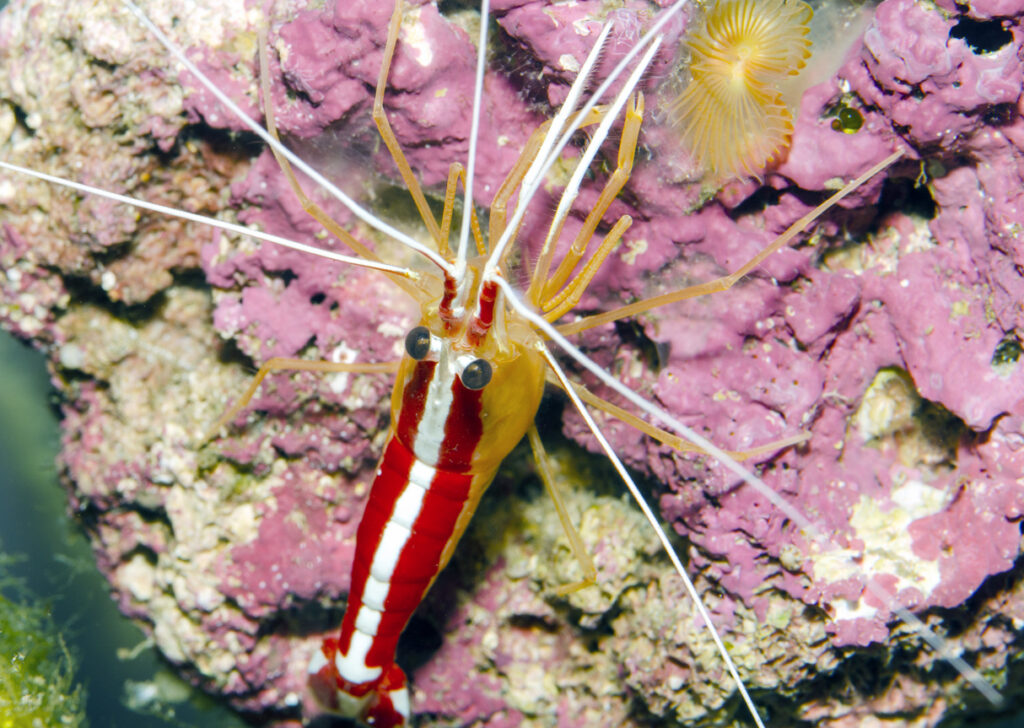
When it comes to colour, it can vary from species to species. While some species are translucent or grey, others can display vibrant red and white hues such as the cleaner shrimp (Lysmata amboinensis).
What’s the difference between a shrimp and prawn?
Prawns (Dendrobranchiata) do differ from shrimp despite their similar appearance. Both belong to the decapod family, but they come from different biological groups. Prawns generally have a straighter body, with three pairs of claw-like legs while shrimp have one or two.
Shrimp are typically found in saltwater, while prawns thrive in freshwater. However, some species do exist in both groups that live in the opposite water too.
What habitats are shrimp found in?
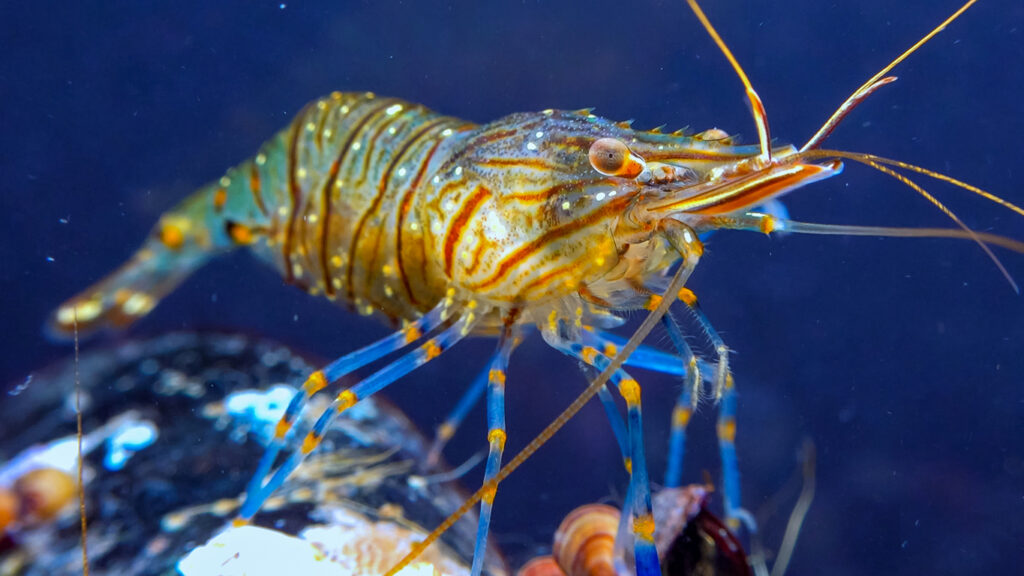
Shrimp are typically found in the world’s oceans, usually found on the muddy or sandy floors. However, some species are also found in freshwater environments. While many are bottom-dwellers, they have also adapted to the likes of coral reefs and estuaries. Rock pool shrimp (Palaemon elegans), for example, are common in rocky shores and tide pools across the UK.
5 interesting facts about shrimp
That’s not everything you need to know about these fascinating crustaceans. Shrimp are an incredibly diverse group of crustaceans that display a number of different behaviours. With that in mind, here are some more top facts you need to understand about shrimp.
- Shrimp can perform a backwards swimming manoeuvre to evade predators, known as the caridoid escape or tail-flipping. It flexes its muscular abdomen, propelling itself backwards to escape danger.
- Shrimp frequently engage in symbiotic relationships which benefits themselves and other organisms. For example, some shrimp species will help to create homes for fish in return for protection from the fish, while cleaner shrimp will consume parasites and bacteria from fish to provide them with food while the fish benefits from disease prevention.
- Shrimp are omnivores, eating a large number of foods that depends on their development stage. Larval shrimp will feed on primarily algae and plankton, while grown shrimp are scavengers.
- The pistol shrimp (Alpheidae), also known as the snapping shrimp, can make an incredibly loud noise when it snaps its claws. This produces a cavitation bubble, and when the bubble collapses, it creates a shockwave and sound that exceeds 210 decibels. To put into perspective, normal conversation is around 50-60 decibels, while an airplane taking off is around 120-140.
- Shrimp go through an extensive lifecycle, beginning as fertilised eggs that are carried by the female. They then go through larval stages before developing swimming appendages and then beginning to resemble miniature adults, before eventually continuing to grow and mature.
How many shrimp can you see at Blue Reef Portsmouth?
Here at Blue Reef Portsmouth we have a number of shrimp species for you to test your new knowledge. Here are some of the shrimp you can see on your next visit:
- Fire shrimp (Lysmata debelius): The fire shrimp is a species of cleaner shrimp found in the Indo-Pacific region. They are called such because they are a stunning, bright red.
- Cherry shrimp (Neocaridina davidi): This is a freshwater shrimp native to areas such as Taiwan and Vietnam, also known as the dwarf shrimp.
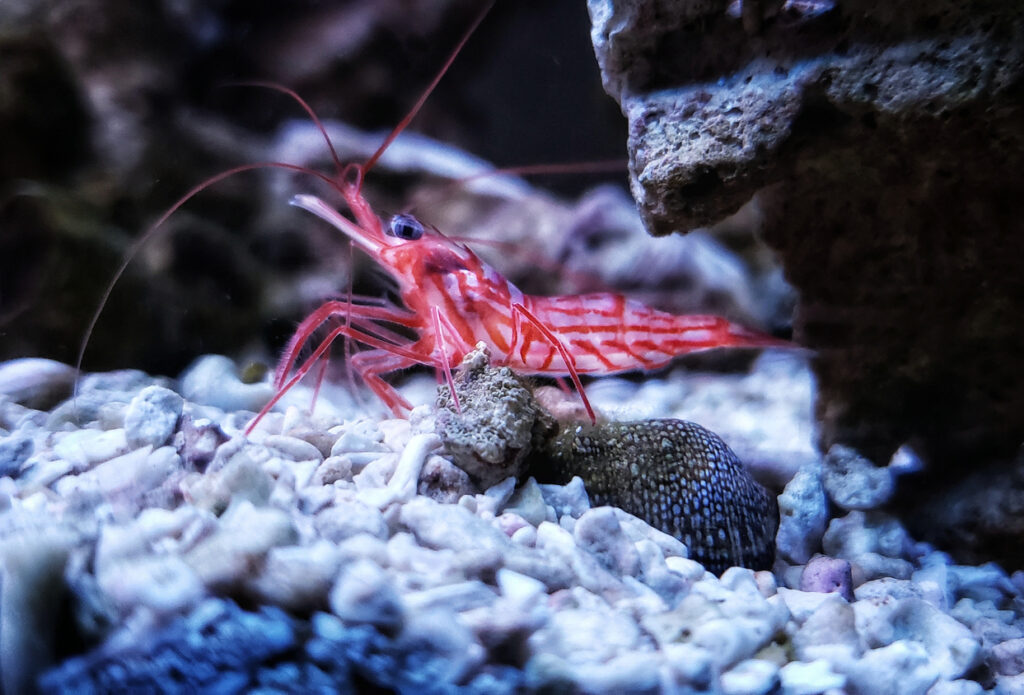
- Peppermint shrimp (Lysmata wurdemanni): Found in the Caribbean, the peppermint shrimp is known for its transparent body with red stripes. It lives in saltwater among reef structures.
- Banded coral shrimp (Stenopus hispidus): Also known as the boxer shrimp, this species has a distinctive white and red banded body with long, flowing white antennae. They have oversized claws and act as cleaner shrimps.
- Amano shrimp (Caridina multidentata): This is a freshwater species native to Japan and Taiwan, with a translucent body featuring reddish-brown spots.
You can find our array of shrimp across many of our exhibits, including Freshwater Zone and Tropical Treasures.
To learn more about crustaceans and many other species from around the world, book your tickets to Blue Reef Portsmouth today.