
Rockpooling is a favourite coastal pastime, allowing you to carefully investigate the crevices and underwater pockets to discover fascinating creatures that you might not otherwise have noticed. Whether you’re a small child or an adult, rockpooling is a really enjoyable way to spend a day, so long as you do it safely and are aware of the importance of looking after the creatures you find.
The southern coastline around Portsmouth is filled with great opportunities to go rockpooling, so here is a guide to help you understand what you might see and how to get the most out of your rockpooling adventure.
What are rockpools?
Rockpools are small pools of seawater left behind when the tide goes out. They form in the rocky hollows and crevices, forming a self-contained habitat for aquatic life. They appear all along the coast, but they are best explored when the tide goes out, for safety reasons and for the chance to see more.
Common rockpool creatures you can find
There’s a great variety of creatures living amongst the rocky shores, all of which have had to adapt to survive the harsh conditions of a rockpool. Here are some of the species that you can expect to find on your next rockpooling trip.
Starfish
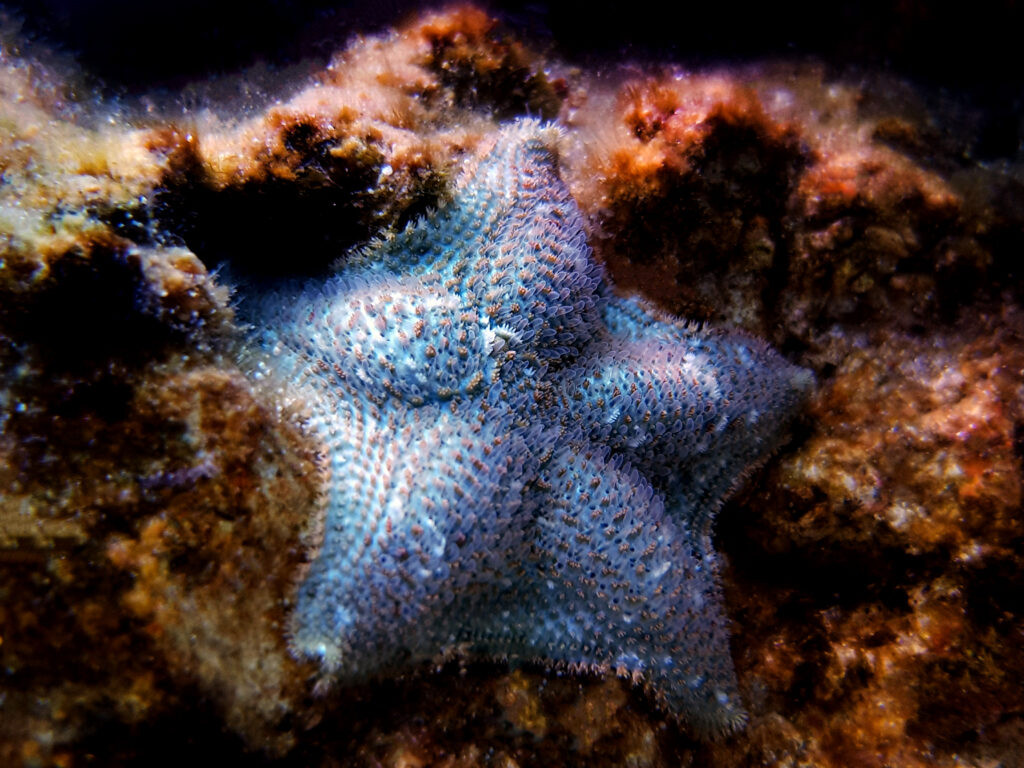
Starfish will typically cling tightly to rocks or hide under seaweed during the low tide, using their tube feet. Species like the common starfish (Asterias rubens) and the cushion star (Asterina gibbosa) can be found amongst rockpools in this way.
They have adapted specially to survive these low tide conditions, such as pumping themselves with cold seawater to lower its body temperature and survive exposure to the sun.
It’s really important to leave the starfish stuck to its rock, as pulling it off can cause damage and injury. Be sure to leave the starfish in its place, and return any rocks that you might have moved in order to see the starfish.
Shore crabs
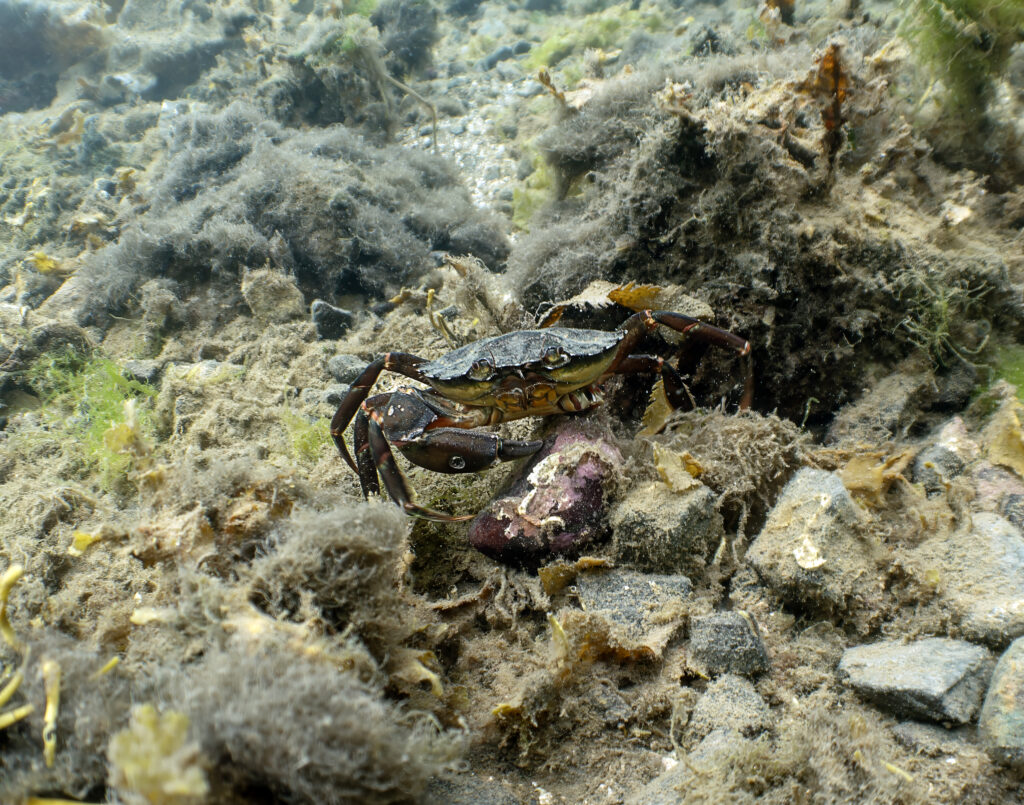
The shore crab (Carcinus maenas) is the most common species of crab you’ll find amongst rockpools in the UK. They are usually green in colour, but can be red or orange, with a shell that’s up to 9cm wide.
Shore crabs have their hard exoskeleton shell to offer protection from pounding waves and predators. They aren’t picky when it comes to food, meaning they’re still able to feed and survive when in a rockpool.
It’s probably best to observe shore crabs in their rockpool and avoid handling them where you can, as they can pinch! However, you can place the crabs temporarily in a bucket filled with fresh seawater for a closer look. Just remember to handle them carefully and never hold them by a leg or claw. Always put them back where you found them.
Sea anemones
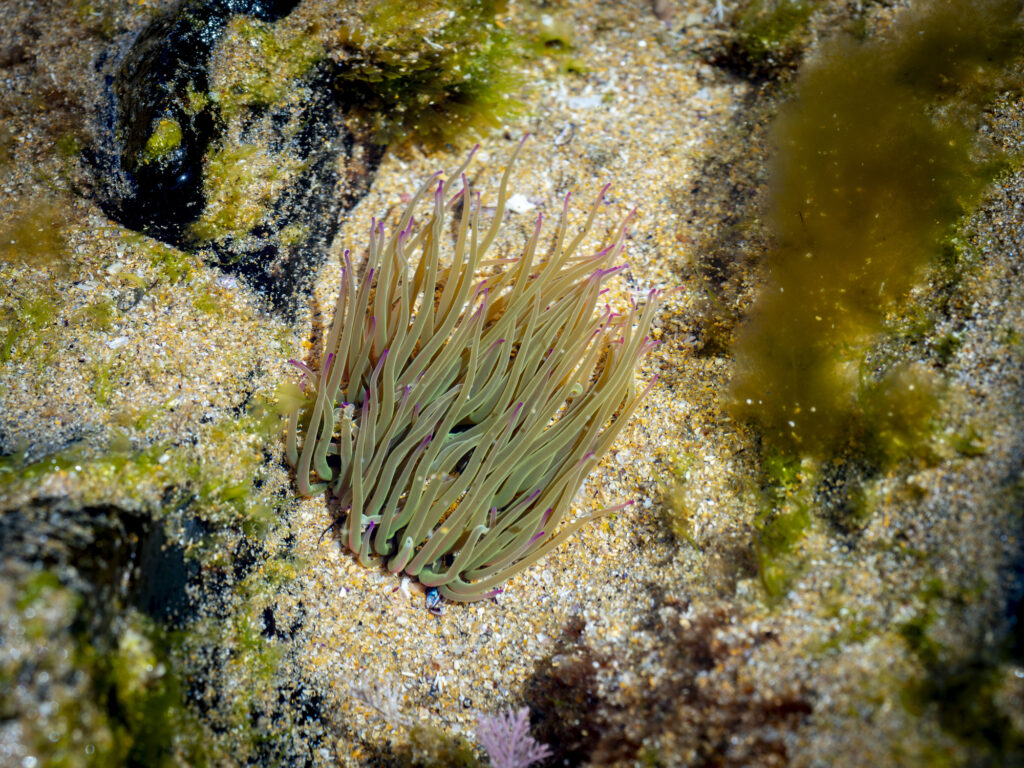
Sea anemones are small creatures that make rockpools look like underwater gardens! They were actually named after the anemone flower, but are closely related to jellyfish. Sea anemones anchor themselves to rocks using their muscular foot, and will pull their tentacles in to prevent drying out in the sun.
You might see species like the snakelocks anemone (Anemonia sulcata) and the beadlet anemone (Actinia equina) amongst rockpools on the UK coastline. Remember to never pull an anemone off its rock as it could be fatal, and try to avoid touching them. If you need to move rocks to see them, always put them back.
Prawns & shrimp
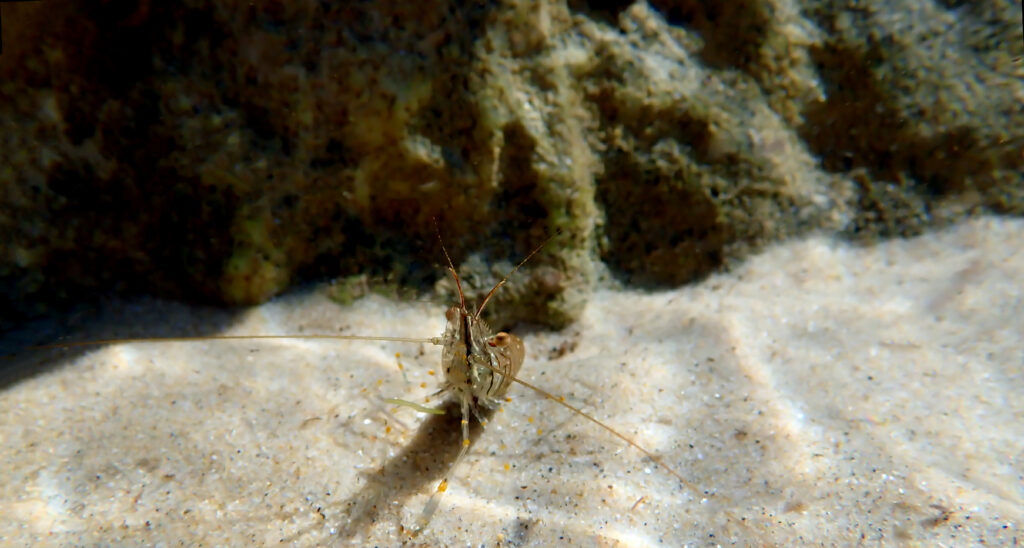
You might also notice other crustaceans in rockpools, such as prawns and shrimps. Species like the rockpool shrimp (Palaemon elegans) and the common prawn (Palaemon serratus) are most common in rockpool habitats, hiding in crevices or under stones.
Prawns and shrimp can tolerate the changes in water temperature, oxygen and salinity, and their transparent bodies help them hide from predators. They will also eat anything they can find, from decaying seaweed to dead mussels.
If you need to look at them more closely, never use a harsh net. Instead, use a clear container to temporarily catch them in seawater and always put them back where you found them.
Limpets
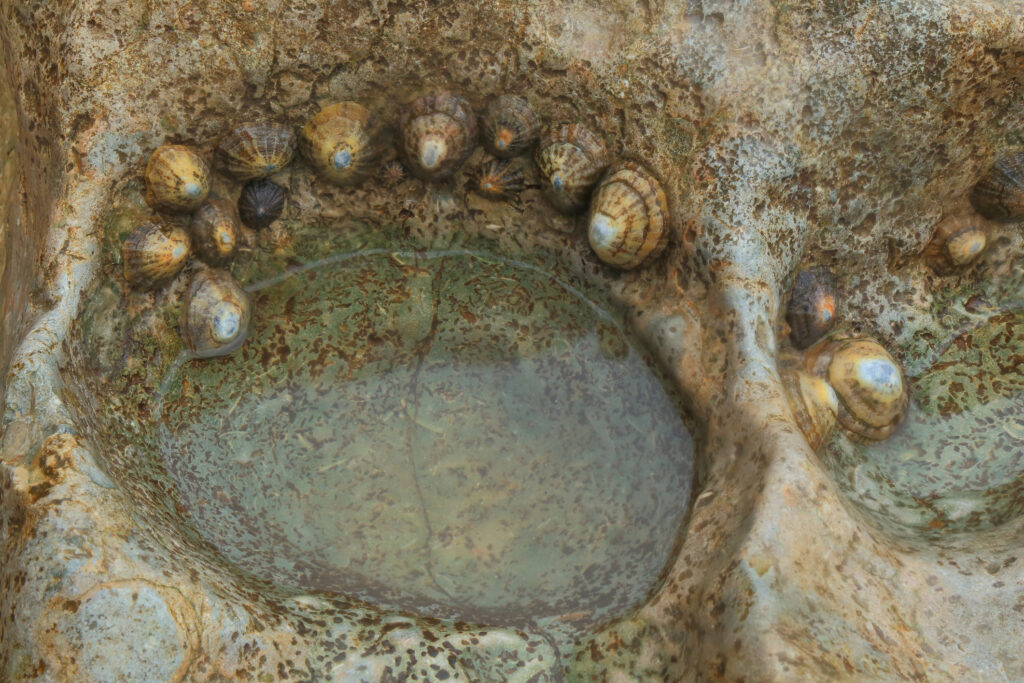
Limpets are a type of marine snail that you’ll commonly see on the rocky shores. They are very important to the ecosystem as they help to control algae growth. By clearing the algae, limpets help to make way for species like barnacles and mussels.
Limpets use their muscular foot to grip to the rocks and stay there in order to remain wet. It’s likely the common limpet (Patella vulgata) you’ll see when rockpooling, characterised by its cone-shaped shell. They come to life when the tide comes in, moving around to eat algae using their really tough tongue.
Never remove a limpet that’s stuck to a rock, as you’ll likely damage its muscles. You should also avoid scraping any algae or other substances off the rocks, as it could be an important food source for the limpet.
Blenny fish
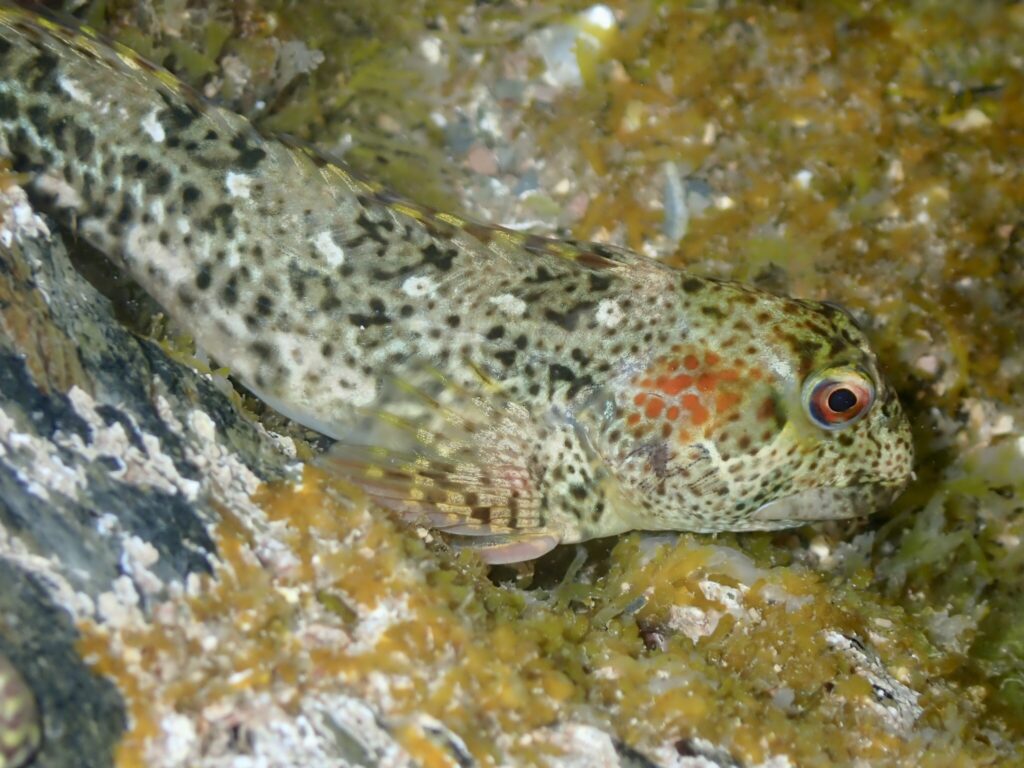
Blennies are common fish amongst rockpools and shallow water. They are scaleless and covered in mucus, resembling an eel-like fish with an elongated body and bulbous eyes.
Blennies lack a swim bladder, so they typically stay on the bottom, taking in oxygen through their moist skin when exposed. These fish will hide in rock crevices and amongst the seaweed to help them survive in the rockpool.
Not all blennies live in rockpools. Some species, like the lawnmower blenny (Salarias fasciatus) are found in tropical waters.
Sea urchins
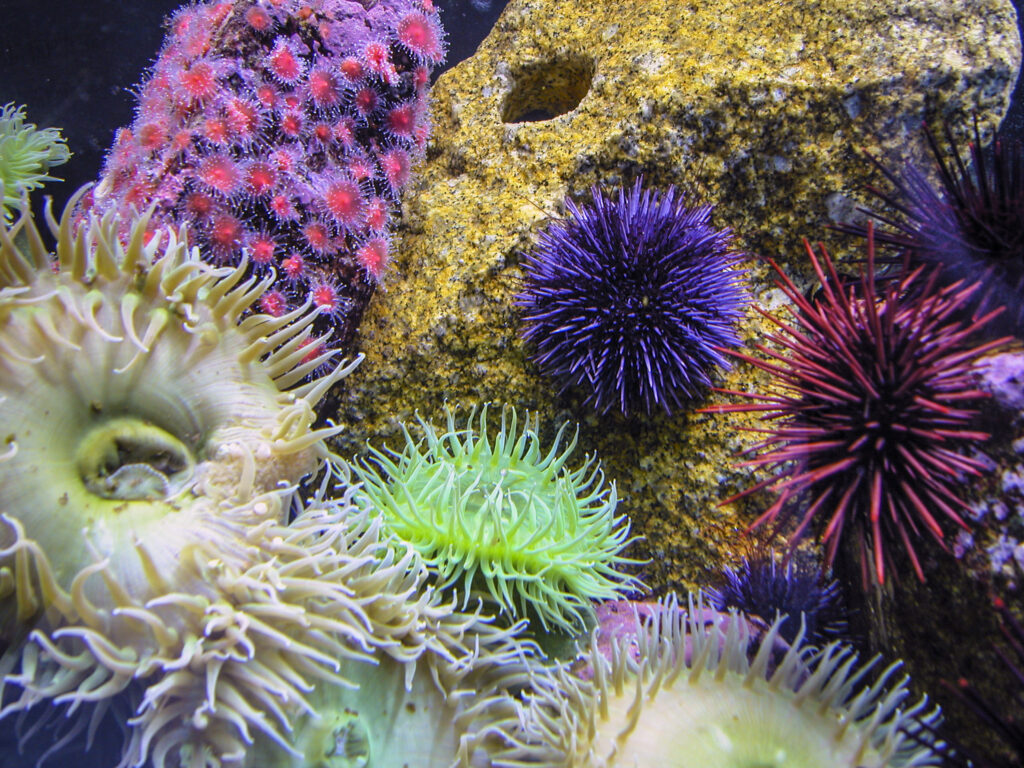
Sea urchins are a type of echinoderm, making them closely related to starfish. They are covered in spines and can look more like plants than animals, but they have suction feet to help them move across the ocean floor and feed on algae and seaweed.
You can usually find sea urchins hiding during the low tide, living in the darkest and safest parts of the rockpool like rock ledges or underneath thick seaweed. This is to help them stay out of the light and avoid any strong waves when the tide comes back in.
You’ll see species like the green sea urchin (Psammechinus miliaris), which is primarily green with bright purple tipped spines.
Top tips for rockpooling
Rockpooling can be really fun, but it’s so important to stay safe as the coastline can be very unpredictable, not to mention the British weather. Here are some helpful tips to ensure you enjoy your next rockpooling trip safely and have the best chance of seeing some incredible creatures!
- Always check the tide times: This is really important so you can ensure you plan your trip at the right time. The best rockpools are only exposed during the low tide, and if you arrive at the wrong time, you could end up stranded by the incoming tide. You can check tide tables and predicted times online.
- Supervise children at all times: Some rockpools can be much deeper than you think, not to mention the slippery rocks. It’s really important to keep sight of children at all times and not let them wander off on their own.
- Wear the right clothes: Be prepared for any weather and ensure you’re wearing clothes and shoes that you don’t mind getting sandy or muddy. Take a raincoat as well as suncream, and wear appropriate shoes that will help you keep a firm grip on the rocks.
- Don’t go alone: It may be more sensible to go rockpooling in a group, or at least with someone else. This can ensure you can look out for each other and help if needed.
- Don’t take any plants or animals away: Appreciate the creatures in the rockpool while leaving them in their home. Removing them and not putting them back can have a huge impact on the ecosystem, not to mention causing injury to the species you’ve removed.
Discover rockpool creatures at Blue Reef Aquarium Portsmouth
A lot of the creatures mentioned here can be seen with your own eyes at Blue Reef Aquarium Portsmouth, including sea urchins and starfish. Our Solent Seas exhibit is the ideal place to put your knowledge of these species into practice and learn more about some native aquatic animals.
Book your tickets online today and discover an exciting underwater world!