
Prepare for a journey into the hidden world of the xenopus frog, a fascinating amphibian of the water that has mastered the art of survival through some truly incredible natural features.
What is an Xenopus Frog?
Also known as the African clawed frog (Xenopus laevis), it is almost entirely aquatic, while many amphibians split their time between the riverbank and the water. They are highly distinctive members of the amphibian family, having evolved specifically for a life spent submerged in freshwater environments in the wild.
Xenopus Frog Size and Physical Features
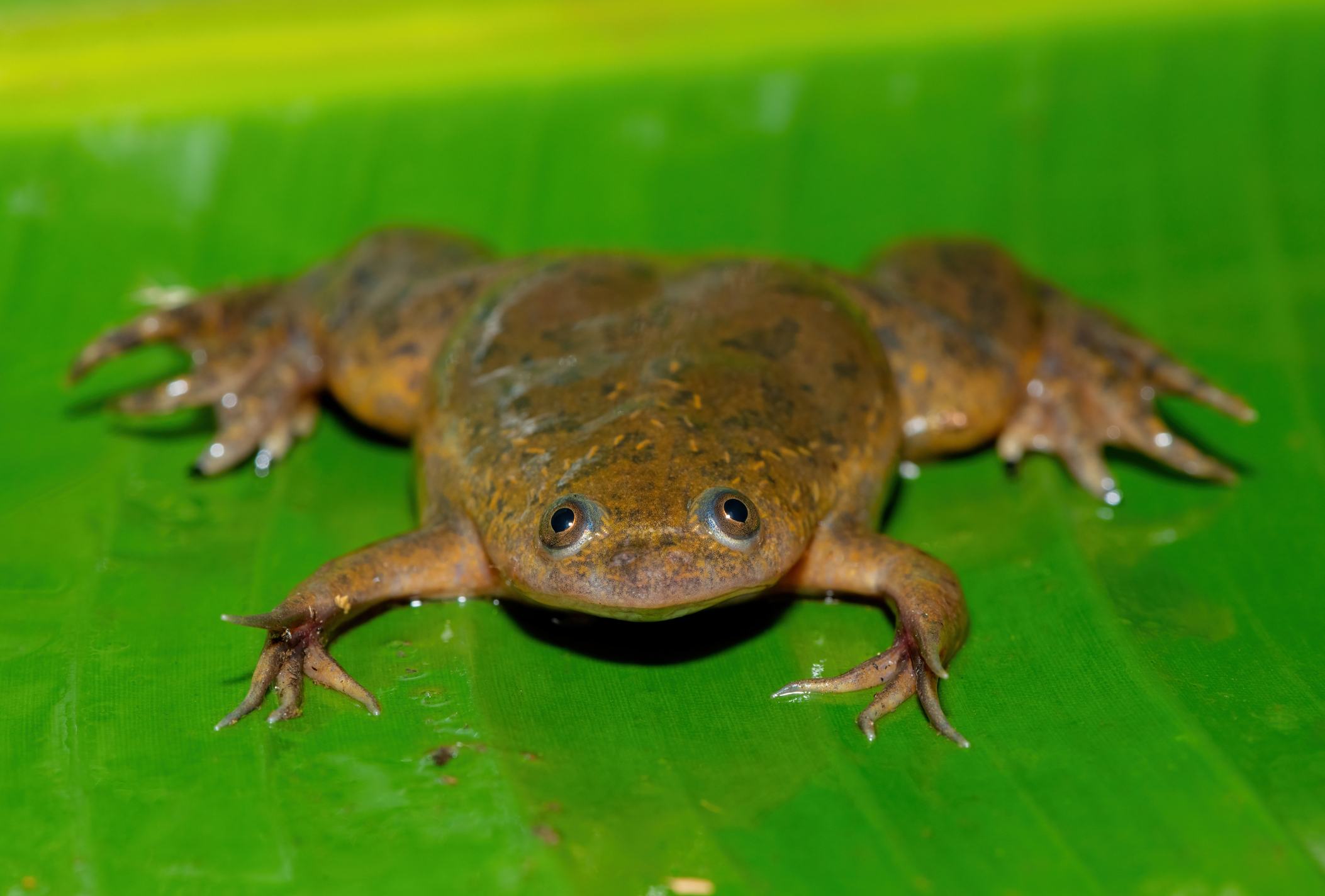
When you get a closer look at these frogs, you will notice they have a distinct, flattened body and a small, wedge-shaped head. The females are typically larger, commanding great respect in the water. Their eyes and nostrils are positioned right on top of their heads, which allows them to stay almost completely submerged while keeping a sharp lookout for both prey and predators like herons.
Their smooth skin acts as natural camouflage, often decorated with mottled blotches of greenish-grey or brown across the back, while their undersides are a contrasting off-white or yellow tone. Their limbs are just as specialised; their small front legs have delicate, non-webbed fingers used for feeding, while their powerful hind legs are large and webbed for high-speed swimming. On their back feet, you will find three inside toes tipped with dark, cornified points that look just like claws, giving them their famous name.
Survival Adaptations
These frogs have developed some truly incredible ways to survive in the wild. One of their most fascinating features is a sensory system that looks like tiny stitches along the sides of their bodies. This works much like a fish’s lateral line, allowing them to detect vibrations and movement even in very murky water. Because they don’t have tongues, they use their clawed front hands to expertly push food into their mouths, using the powerful expansion of their throat to vacuum in a meal.
If their water source dries up during a long drought, xenopus frogs exercise great patience, burrowing into the mud to stay dormant for up to a year in a process called aestivation. They are even capable of secreting toxins from their skin to ward off hungry predators and have the amazing ability to regenerate lost limbs if they fall victim to predators.
They are also masters of disguise, shifting their skin colour to blend in with their surroundings to avoid being spotted. While they do have lungs and must come to the surface for a breath of fresh air, they are also exceptionally efficient at absorbing oxygen directly through their skin while they are under the water.
Native Habitat
Originally from the African Rift Valley, these frogs can be found in countries south of the Sahara Desert, including South Africa, Namibia, and Angola. However, they are also hardy explorers and have become an invasive species in many other parts of the world, including the United Kingdom, the United States, and Italy.
They prefer the quiet life, usually choosing warm, stagnant pools or slow-moving streams where temperatures sit comfortably between 15°C and 26°C. They are highly opportunistic and will quickly move into new ponds or water bodies if their original home becomes unsuitable.
Xenopus Frog Conservation Status
The xenopus frog is currently listed as a species of Least Concern. Their ability to adapt to various environments and their high reproductive rate mean they are currently thriving in many different locations across the globe.
5 Additional Facts about Xenopus Frogs
- Even though they are incredible swimmers, they are quite clumsy and awkward if they ever have to move on land.
- A single female frog can lay up to 2,000 eggs at a time, helping the next generation thrive.
- Xenopus frogs are nocturnal, meaning they become most active and lively under the cover of darkness.
- While they lack vocal cords, males can still sing underwater by producing a unique, vibrating clicking sound to attract a mate.
- They are known for living quite long lives for frogs, often reaching ages of 15 years or more when living in the right conditions.
Find us in Freshwater Zone
You can discover these amazing amphibians for yourself by visiting our Freshwater Fun zone, where you can see their unique adaptations in action. Make sure to book your tickets online in advance to experience a day out that is truly extraordinary.
Type
Amphibian
What do they eat?
Bloodworms, earthworms, brine shrimp and krill
Size
Up to 15cm in length
Water Type
Freshwater
Where are we?
African Rift Valley