
Cuttlefish are one of many fascinating species here at Blue Reef Newquay. Masters of camouflage and supremely smart, they look more like aliens from space than creatures from our seas and oceans.
Join us for a closer look at the remarkable cuttlefish. We’ll fill you in on their size, shape, and habitat, before sharing some curious facts about their behaviour and abilities.
What is a cuttlefish?
Cuttlefish are marine molluscs that belong to the Cephalopoda class of animals. As cephalopods, cuttlefish are closely related to octopuses and squid – hence the strong family resemblance!
Typically, cuttlefish live in warm, shallow waters, usually close to the coast. They range across many of our seas and oceans, from the Mediterranean Sea and the African coast, to the reef-strewn tropical waters of Australia.
How many species of cuttlefish are there?
Cuttlefish belong to the Sepiida family, and scientists estimate there to be around 120 recognised species. They come in all shapes, sizes and colours, from the tiny dwarf cuttlefish (Sepia bandensis), measuring just five centimetres, to the mighty giant cuttlefish (Ascarosepion apama), which can grow over a metre in length and weigh in at over 10 kilograms.
Cuttlefish live in UK waters, with the most common cuttlefish found in the UK and Europe being the aptly named common cuttlefish (Sepia officinalis), which also happens to be one of the largest species.
Key appearance and anatomy features
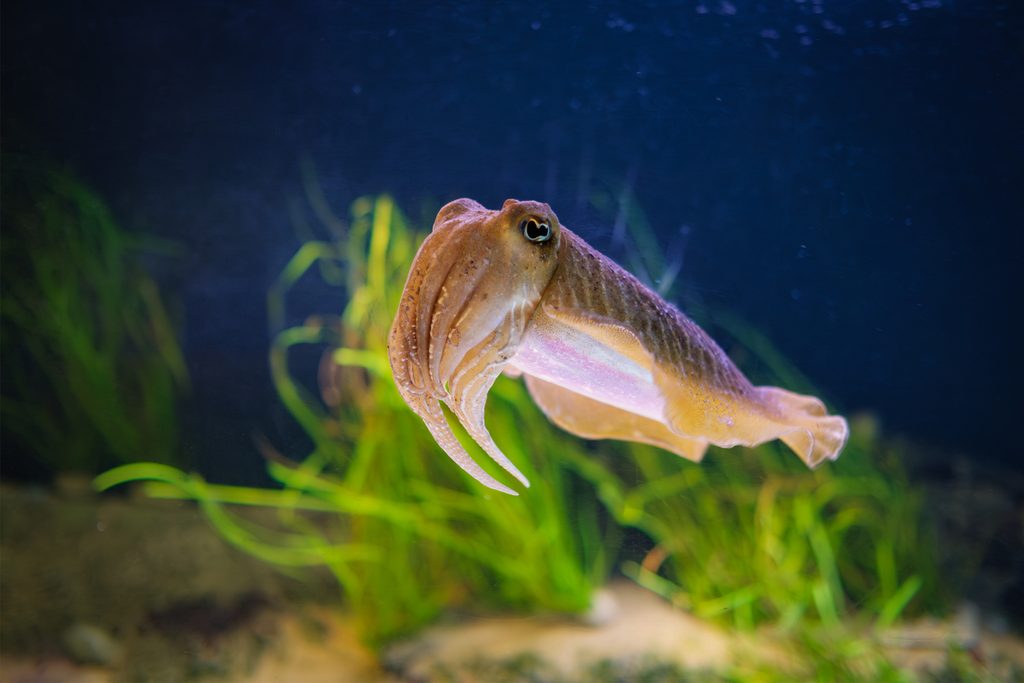
At first glance, cuttlefish look a lot like squid and octopuses. But there’s plenty that distinguishes them from their cephalopod cousins – from their remarkable colour-changing ability to their unique “cuttlebone”, which controls buoyancy.
Here are some of the remarkable features that most cuttlefish species share.
Cuttlebone
All species in the Sepiida family boast a cuttlebone, which is where the name cuttlefish originates. This is essentially a hard, tube-like structure that cuttlefish use for buoyancy control.
When cuttlefish swim, they fill or discharge their cuttlebone with water to control movement. This is all powered by an organ called the “siphuncle”, which controls the amount of water and air in the cuttlebone.
Ten appendages
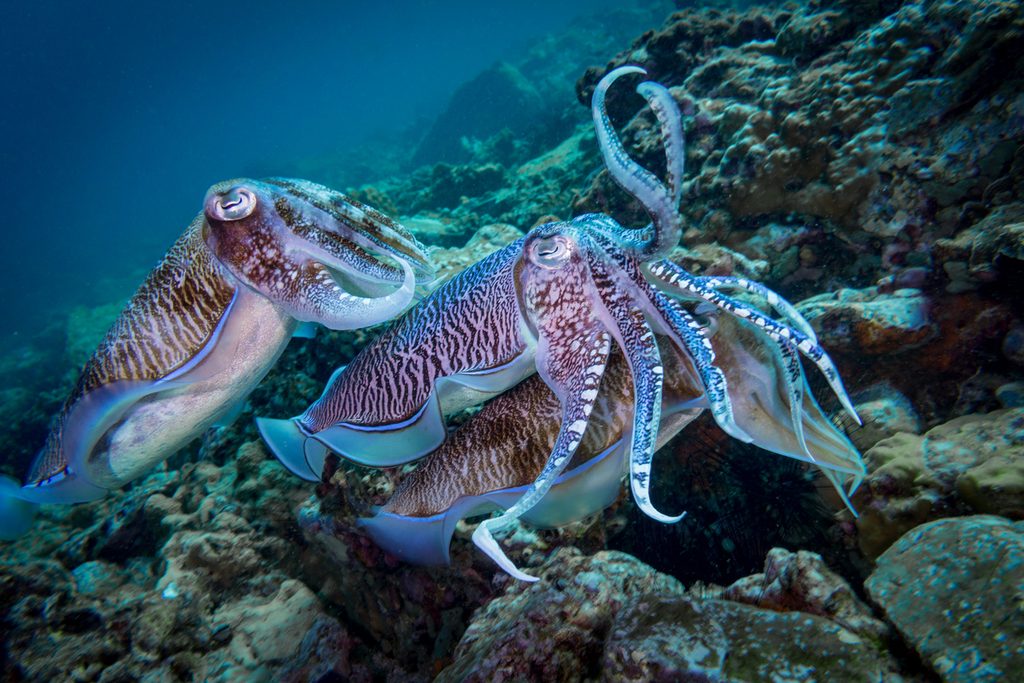
While octopuses famously have eight arms, cuttlefish go a step further. Most species have eight arms plus two tentacles, which are used for grabbing prey and guiding it towards their mouths.
The tentacles of a cuttlefish are fully retractable, so you may think they have just eight arms at first. The tentacles appear suddenly and swiftly when prey is close by, and are used exclusively to snatch hold of their next meal.
Fins
Cuttlefish have a distinct fringe of fins running around their mantle, which is constantly waving in the water. This isn’t simply to make them look more beautiful, but is instead exceptionally useful for swimming and hovering in the water.
Because cuttlefish rely on their cuttlebone for buoyancy, they need a little help changing direction. That’s where the fringe of fins comes in handy, allowing them to glide over the seafloor and move from side to side.
“W”-shaped eyes
Take a good look at a cuttlefish, and one characteristic feature you’ll surely notice is its large, “W”-shaped eyes. These are unique to the Sepiida family and offer an incredible range of benefits – from exceptional light and contrast recognition, to the ability to be able to look backwards.
Did you know that cuttlefish have not one but two sensor cells in their eyes (called “foveae”)? These sit in their retinas, with one oriented forwards and the other backwards. This gives them a near-360-degree field of vision.
Three hearts
Although cuttlefish are most famous for their cuttlebones, it’s fascinating that they have three hearts, too. Two hearts are responsible for pumping oxygenated blood through their gills, while a third takes care of the rest.
That’s not the only reason why these animals have incredible circulation, either. Amazingly, their blood is green-blue rather than red. That’s due to a protein called “hemocyanin”; when it binds with oxygen, it turns a bluish-green colour.
Cuttlefish vs squid: Key differences
Even more so than octopuses, cuttlefish are often mistaken for squid. And it’s easy to see why based on their looks alone, although there are plenty of features that differentiate the two.
Here’s a quick side-by-side comparison to get you up to speed on the key differences between cuttlefish and squid.
| Feature | Cuttlefish | Squid |
| Body shape | Broad, flattened, oval-shaped body | Long, streamlined, torpedo-shaped body |
| Internal structure | Has a porous internal shell called a “cuttlebone” | Has a flexible internal structure called a “pen” |
| Movement | Uses fins along the sides of its body for gentle, precise movement – can also jet through water | Primarily uses jet propulsion for fast swimming |
| Habitat | Mostly found near the seabed in shallow, coastal waters | Found in a wide range of habitats – from coastal waters to the deep ocean |
| Hunting style | Often stalks prey before striking with its tentacles | Pursues prey using its speed and agility |
| Size | Most species are small, although sizes vary considerably. | Ranges from small species to giant squid measuring several metres long |
5 curious cuttlefish facts
Cuttlefish truly are incredible creatures. Beyond their unique cuttlebones and “W”-shaped eyes, here are a few more amazing cuttlefish facts that you should know.
1. They’re masters of camouflage
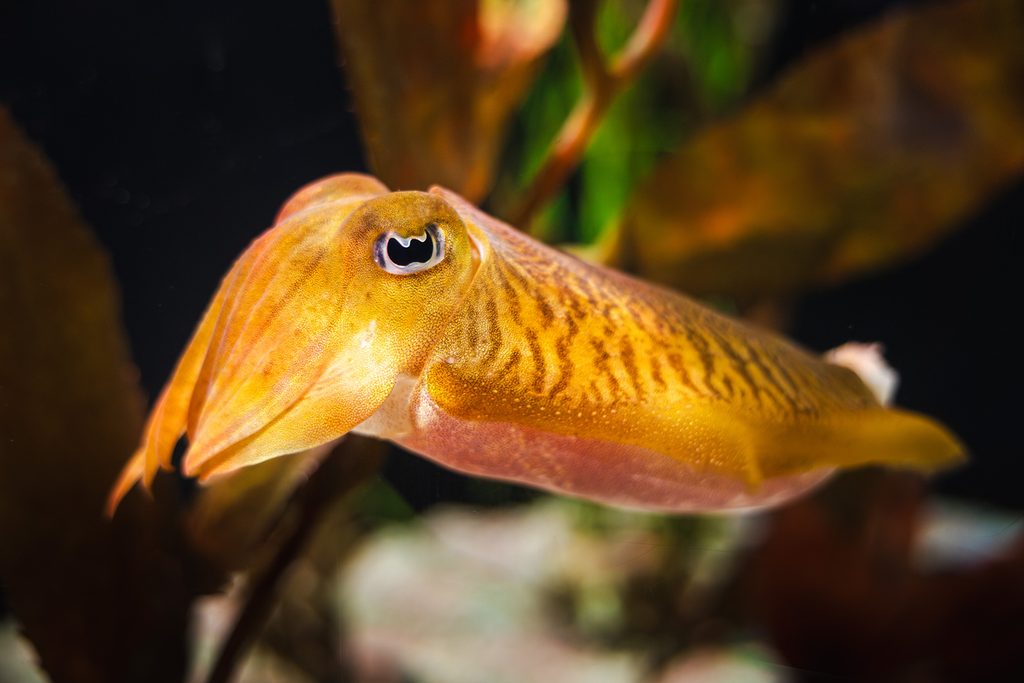
That’s right – few marine creatures do camouflage quite as well as cuttlefish.
Remarkably, cuttlefish can change the colour, pattern and texture of their skin in seconds to blend in with their surroundings. They often mimic sand, rocks and seaweed to ambush prey or give would-be predators the slip.
2. Cuttlefish can flash
Cuttlefish are able to “flash”, putting on a dazzling show of colour, pattern, and texture. This is used as both a defence mechanism to confuse predators and as a signal of courtship with other nearby cuttlefish. They achieve this effect through specialised skin cells called chromatophores and neural control.
3. They’re very intelligent
Like other cephalopods, cuttlefish are smart creatures. Scientists have observed behaviours that suggest that cuttlefish can solve problems and learn from their experiences, while also remembering things about their surroundings.
4. One species of cuttlefish can walk
Not only is the flamboyant cuttlefish (Metasepia pfefferi) one of the most unique creatures in our oceans, it’s capable of the extraordinary: walking. This brightly-coloured cuttlefish species often walks across the seafloor, relying on its flashing colours and camouflage to stay safe from predators. It’s thought that its cuttlebone is too small to provide the right buoyancy, instead using its lower arms and fins to seemingly walk across the seabed.
5. Their eggs are known as sea grapes
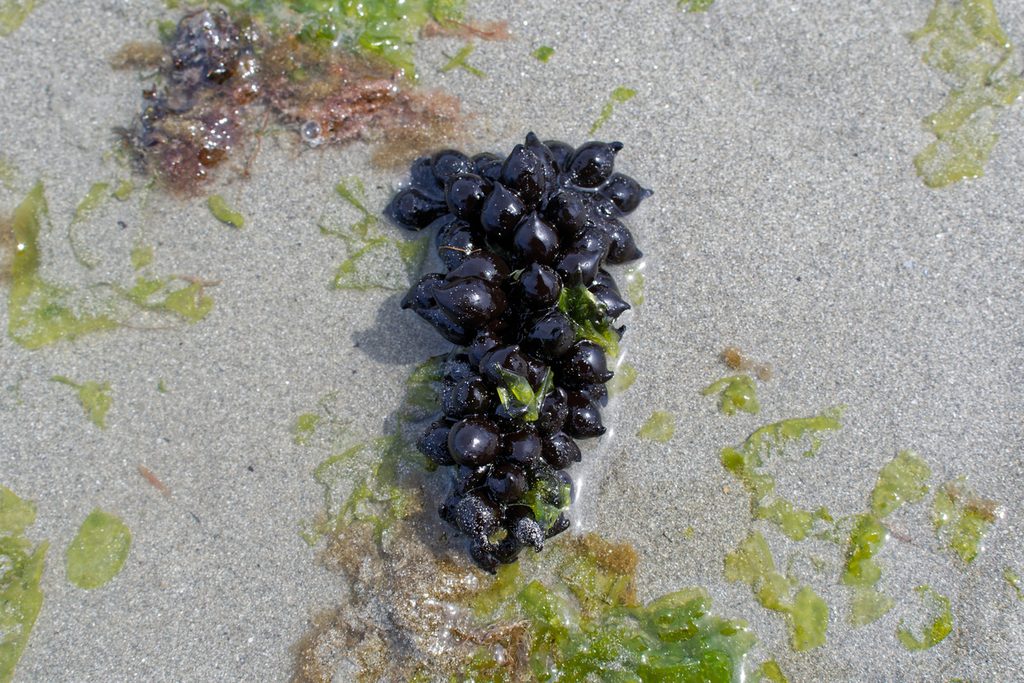
Cuttlefish lay clusters of dark, leathery eggs, which they attach to rocks, seaweed or other surfaces. They are often called sea grapes as they start off coated in ink or protective jelly, before becoming more transparent as the embryo develops.
Can you spot cuttlefish at Blue Reef Newquay?
Here at Blue Reef Newquay, we’re proud to play host to a family of common cuttlefish (Sepia officinalis), which have been hatching at the aquarium since we opened. Why not pay us a visit and see these majestic creatures for yourself?
For more information and to book your tickets, check out our pricing and visitors page.