
There is something about Newquay.
A place that, when bathed by sunlight, carries charm with the same ease its local surfing community carry their boards to the edge of the Atlantic. A place that offers effortless Cornish grace yet swaggers like a Gallagher brother. A place where the undeniable scent of pasty hangs marmalade thick in the salty air.
There is something about Newquay.
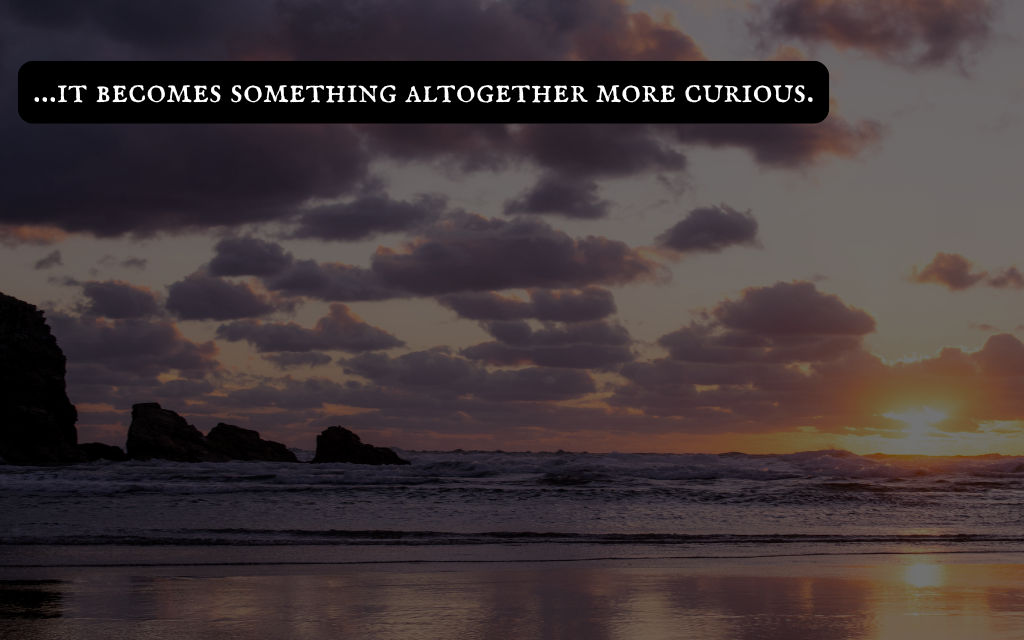
And at night, with the sun lost to some distant horizon and the cliffs blanketed in shadow, where the ebb and flow of an ocean begins to breathe and the caves and coves are painted silent, it becomes something altogether more curious.
There is Something About Pirates
Pirates are a weird one. Considering that by and large their ‘modus operandi’ is to rob, pillage, plunder, drink copious amounts of rum, do a bit more robbing and then wrap up the day with the odd buckle of the swash and plank walk, it’s odd that they enter our lives at such an early age.
I don’t know if these were the role models my six-year-old self was anticipating, but one thing was certain, I was here for it!
As a kid born what felt like, roughly, two-million miles away from the ocean, these snarling-toothed, cutlass-waving, outlaws were the stuff of dreams. And if anywhere on the UK coast was playing home to pirate-induced fantasy, it was Cornwall.
As a county, Cornwall, is a great storyteller. A place that can spin yarns of Arthurian legend one minute and have you scanning the ocean for sea serpents the next. It is drenched in folklore, peppered with places that make it easy to get lost in the past. Cobbled streets and hidden coves, and the undeniable scent of pasty.
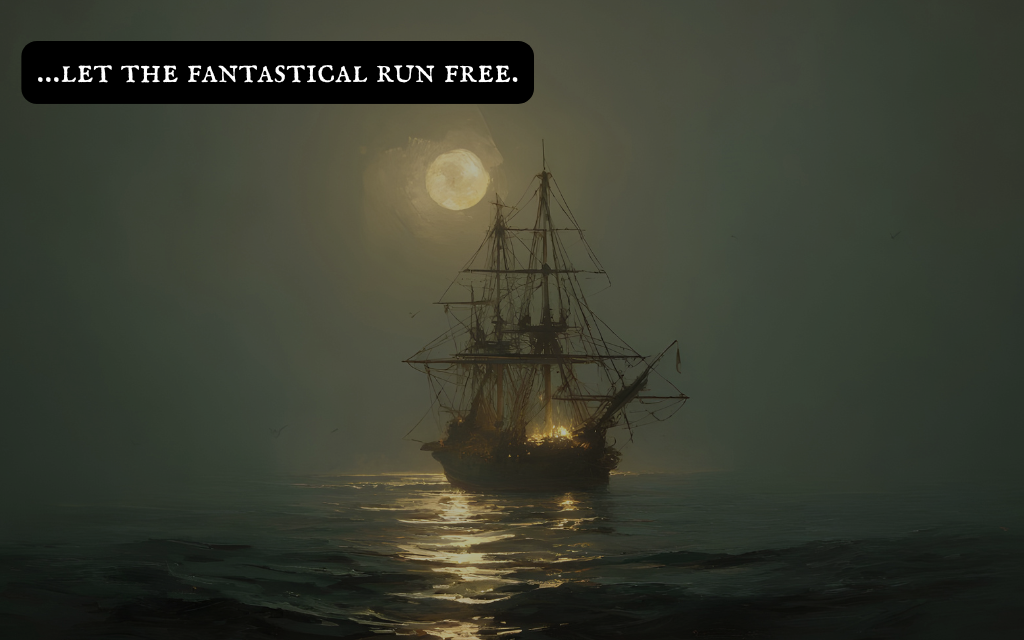
Time and the nature of storytelling have a habit of blurring the lines between reality and fiction, but there is a simple beauty in opening yourself to belief, and when you next gaze out across the bay to the open sea as the sun dips behind the headland, let the fantastical run free.
The Wreckers
Let’s start in the darkness…well, almost.
Picture this. A sky turned to ink, as a storm begins to sing and drag clouds heavy with rain across the bay. A ship rides the swell, wind tearing at its sails, waves battering its hull, spraying salt across its decks as the crew seek escape.
Then, a light.
A dot of hope on the headland, swaying on the storm.
Except, all hope is about to be dashed.
If we follow the light, across the hand holding it, up the arm and over the shoulder we will find the face of a Wrecker. A Wrecker hoping to lure the ship from the clutches of a tumbling sea to a bitter end on the rocks of the headland where they will loot the debris for their own treasures.
Wreckers and Wrecking gangs being a part of factual history, or just another tale woven into the tapestry of local folklore, has been long debated by historians. Hard evidence is slim, the stories however, remain as rich as the pickings littered across storm swept sands.
One particularly dark corner of the Wrecking Gangs tales comes from the law stating that it was illegal to salvage anything washed up from a ship if any of the crew were still alive. One can only imagine the poor member of the crew, riding the storm, crashing into the rocks to be swept overboard, somehow dragging themselves, breathless and terrified over the sand, to come face to face with the Wreckers.
And I thought working in marketing was stressful.
Anyway, moving on…
Smuggling Stories
There is an air of romanticism surrounding 18th and 19th century smugglers. It’s a little bit Robin Hood, a little bit local hero, it’s so rugged it should be offering Bear Grylls outside for a straightener before retiring to a lunch of raw beef and spicy Doritos. Don’t laugh, those Doritos are hot!
But the reality is, it’s less Robin Hood and more Alan Sugar.
It’s a business fronted by entrepreneurs that stands on the foundations of community and local business. I mean, there’s a bit of the dodgy dealings about it all, but needs must. 18th and 19th century smuggling is about an entire economy of goods coming ashore under the blanket of darkness; brandy, tobacco, tea, silk, sugar. Not Alan Sugar, but he’s definitely sticking a digit in the face of an old school smuggler and declaring, ‘You’re hired!’
It’s at this point I must take moment to clarify that I do not actually believe Sir Alan Sugar would hire a smuggler or be associated with smuggling or be found down the Admiral Benbow sharing rum with a smuggler. He’s far too busy.

Humanity loves a good story. If that story involves tiny hidden beaches, moonlit sea caves, smuggler’s tunnels and boats that vanish into mist, then let us gather round the campfire and lend an ear or two.
There are persistent stories around Newquay and the surrounding coastline about smugglers and wreckers. It’s easy to see why. Next time you’re in town as the wind begins whistling and the sky darkens, stand at Towan Head, let your eyes walk the sea and your imagination do its thing.
Newquay may not be famous for pirates, but piracy comes in many shapes and forms, and historians can argue the facts all they like, but there are some tales that hang like mist above the morning sea. And long may they continue.
Mysterious Mermaids
The pirate part is easy. Pirates are fact. Even Johnny Depp was a pirate.
Mermaids, however, are trickier.
If pirates live in the same world as historic leaders, old west gunslingers, and England’s 1966 World Cup winning team, then mermaids travel alongside unicorns, the yeti and a big old fish from Loch Ness.
Historians search for pirate facts, Scooby Doo chases mermaids.
However, there is a mermaid story with ties to Newquay that is genuinely strange.
A few miles north of Newquay lies Mawgan Porth. A place now synonymous with expensive holiday homes and people named Hugo learning to surf on the corporate wellness retreat (no offence Hugo, I’m only jealous).
But once, long before Hugo’s time, back in 1827 this little slice of Cornish heaven became part of what can only be described as a dose of Victorian cryptid-induced panic!
Reports at the time suggest that a number of people, how many we can’t say for sure but for the sake of clarity let’s say, several, reported seeing a mermaid.
Now, when we say mermaid, we mean MERMAID. Not some vague movement off in the distant ocean, not a shadow glimpsed through the curve of a wave, but an actual mermaid in the tidal pools and sunning itself on the rocks around the beach and caves.
Witnesses described the creature as having long, dark hair and a human-like upper body. These sightings went on for days. It grew to such a furore that newspapers began to cover the weirdness, crowds gathered to try and catch a sighting for themselves, and people were divided. Those convinced of their own two eyes and what they’d seen, facing mockery from the naysayers. This is Victorian times so use of the word naysayers is fully legit.
In the modern age we live, this has prime time TikTok energy. The sort of story that would divide Reddit users and fuel the flames of conspiracy. We might have even got a podcast.
But in 1827, the world was a larger place. It had vast swathes of unexplored lands, oceans as deep as they were mysterious. Stories of beasts from the sea would ride in on evening tides and rum-soaked sailors’ tongues.
In 1827, when something strange appeared in the water, ‘mermaid’ was not necessarily considered absurd.
It was simply one possible explanation.
And Cornwall already possessed an unusually deep mermaid mythology.
The Mermaid of Zennor being perhaps the most famous example. A mysterious woman who lured a local singer to the depths of the sea.
Cornish mermaids were rarely cute. In tales, they were dangerous, often said to appear with warnings, temptations, or as omens. Disney had no business here.
But it makes sense. Cornwall’s relationship with the sea has never been sentimental. The Atlantic offers food and work. A constant provider, and a constant danger. A permanent mystery that only grew deeper the further back through the mists of time we venture.
Perhaps mermaids were a way of personifying the sea itself, beautiful from a distance, but fundamentally unknowable and filled with unseen dangers.

The Ghosts of Newquay Past
Newquay still carries traces of that older, emotional landscape. A hint of mermaid or smuggler on its lips when the seasons shift.
You notice it especially in winter.
The wind becomes aggressive, the ocean turns metallic grey, impatient clouds ride the sky, and the sea finds its voice.
When the seasons change, the pirate stories and mermaid sightings stop feeling quaint. When nature returns centre stage and the people move on, it’s easy to see how human perception can be altered. How we can become more susceptible to the extraordinary and the supernatural.
Cornish folklore is alive and kicking. It is the salt of the sea and the call of the gulls, the shifting tides and the hidden coves, and the still undeniable scent of pasty.
Perhaps the most unsettling stories are not necessarily the supernatural ones, but the ones involving ordinary people collectively deciding that something strange might be true.
Perhaps that’s what happened at Mawgan Porth.
A few people saw something.
Then more people arrived wanting to see it too.
Soon, the story itself became real enough to survive for almost two centuries.
Perhaps.
Or perhaps, as I like to think, it was a mermaid.